

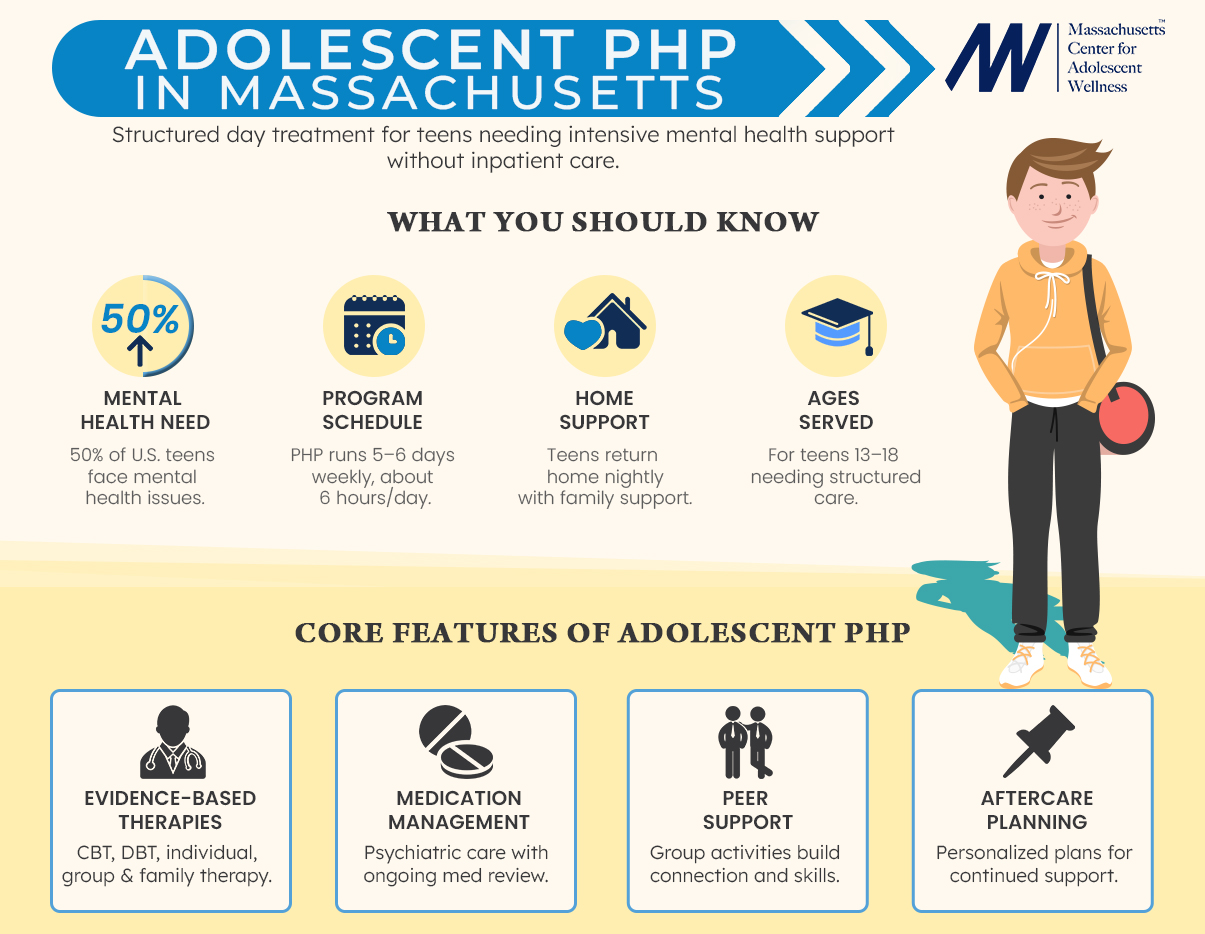
Approximately half of all American adolescents are affected by mental health concerns, but few receive the help they need. At the Massachusetts Center for Adolescent Wellness (MCAW), we’re deeply committed to addressing a nationwide concern: the vast number of adolescents who go untreated for mental health conditions.
MCAW’s adolescent day treatment program (also known as a Partial Hospitalization Program or PHP) offers an innovative solution for teens who need intensive mental health treatment but don’t require round-the-clock supervision. Our teen day treatment program in Massachusetts provides structured, full-day programming five days a week, allowing adolescents to receive clinical care during the day and return home to their families each evening.
What is Adolescent Day Treatment?
Adolescent day treatment, also called a teen PHP, is a structured, clinically intensive outpatient program designed for teenagers who need more support than weekly therapy can provide, but who are stable enough to live at home. It bridges the gap between inpatient/residential care and traditional outpatient services.
In a typical teen day treatment program in MA, adolescents attend treatment during the day hours (usually six hours a day, five days a week) and return home each evening. This model preserves family connections and daily routines while delivering the kind of focused, evidence-based mental health care that helps teens build lasting skills for recovery.
MCAW’s program combines individual, group, and family therapy, psychiatric care, and psychoeducation into a cohesive daily schedule. Our compassionate team of therapists, nurses, psychiatrists, and mental health professionals works together to create a safe and personalized environment for each teen.
How Does Day Treatment Differ from PHP, IOP, and Residential Care?
Understanding where day treatment fits in the continuum of care for adolescents helps families choose the right level of support.
| Level of Care | Hours per Day | Overnight Stay | Best For |
| Residential / Inpatient | 24 hours | Yes | Teens requiring 24/7 supervision due to safety concerns |
| Day Treatment / PHP | 5-6 hours/day | No | Moderate-to-severe symptoms, stable home environment |
| Intensive Outpatient (IOP) | 3 hours/day, after school | No | Teens stepping down from PHP, ongoing support needs |
| Outpatient Therapy | 1 hour/week | No | Mild symptoms; strong baseline functioning |
Unlike residential or inpatient programs, adolescent day treatment does not require overnight stays. Teens in our teen PHP mental health program in Massachusetts return home each evening, maintaining family bonds and community ties that are essential to long-term recovery.
Our Afterschool Intensive Outpatient Program (IOP) meets for approximately three hours in the afternoon, making it appropriate for teens who have stabilized and are ready to return to school. Day treatment/PHP involves more hours, more clinical services (including psychiatric care and medication management), and is suited for teens who are not yet ready for that transition.
What to Expect in A Daily and Weekly Teen PHP Schedule
Understanding the structure of our adolescent partial hospitalization program helps families prepare for their teen’s treatment journey. Our PHP operates Monday through Friday, typically from 9:00 AM to 3:00 PM. This provides intensive clinical treatment while allowing teens to return home each evening.
| Time | Activity | Therapy Type |
| 9:00-9:30 AM | Morning Check-in | Group Process |
| 9:30-10:30 AM | Individual Therapy | One-on-One Clinical |
| 10:30-10:45 AM | Break | Structured Downtime |
| 10:45-11:45 AM | Group Therapy | Cognitive Behavioral Therapy (CBT) /
Dialectical Behavior Therapy (DBT) Skills |
| 11:45 AM-12:45 PM | Lunch & Peer Support | Social Connection |
| 12:45-1:45 PM | Family Therapy (2x/week) | Family Systems |
| 1:45-2:45 PM | Psycho-education | Mental Health Education |
| 2:45-3:00 PM | Closing Circle | Reflection & Planning |
This structured schedule ensures teens receive comprehensive care. It maintains predictability and routine essential for recovery.
How Does Medication Management Work in PHP?
Our adolescent PHP includes comprehensive psychiatric care and medication management as core components of treatment. Licensed child and adolescent psychiatrists provide ongoing medical supervision throughout the program.
Psychiatric oversight includes:
- Initial psychiatric evaluation within 48 hours of admission
- Weekly psychiatric appointments for medication review
- Ongoing monitoring of medication effectiveness and side effects
- Coordination with family physicians and other healthcare providers
- Crisis intervention and medication adjustments as needed
Our psychiatric team specializes in adolescent mental health challenges, including medication management. They work to ensure teens receive consistent clinical oversight while developing healthy medication compliance habits.
Who is a Good Candidate for Teen Day Treatment in Massachusetts?

Our adolescent day treatment program in Massachusetts serves teens ages 13-18 experiencing moderate to severe mental health symptoms who do not require 24/7 supervision and have a stable home environment for evening and weekend support.
Conditions we treat in our teen day treatment program include:
Anxiety Disorders and Panic Disorders That Disrupt Daily Activities
When anxiety becomes severe enough to interfere with school, relationships, or everyday functioning, day treatment provides the structured support teens need to develop lasting coping skills.
Depression Disorders and Mood Disorders, Including Bipolar Disorder
Teens experiencing persistent sadness, mood instability, or loss of interest in life benefit from the consistent daily structure and clinical support our program provides.
Trauma and PTSD-Related Conditions
Our trauma-informed approach helps adolescents process difficult experiences in a safe environment, reducing symptoms and rebuilding a sense of safety and trust.
Attention-Deficit/Hyperactivity Disorder (ADHD) and Attention-Related Challenges
For teens whose ADHD significantly impacts their academic performance or emotional regulation, our structured programming and psychiatric oversight help them develop focus and self-management skills.
Self-harm behaviors and Suicidal Ideation
Teens engaging in self-harm or experiencing suicidal thoughts receive intensive clinical support, safety planning, and evidence-based therapies in a closely monitored environment.
Dual diagnosis Involving Mental Health and Substance Use
When a teen is managing both a mental health condition and substance use, our integrated treatment approach addresses both issues simultaneously for more effective and lasting recovery.
Behavioral disturbances Affecting School and Family Functioning
Teens whose behaviors are creating significant conflict at home or school receive targeted therapeutic support to build emotional regulation, communication, and problem-solving skills.
What Therapies Are Offered in Our Adolescent Day Treatment Program?

Our adolescent day treatment program in Massachusetts integrates evidence-based therapies tailored to each teen’s unique needs. Each therapy type plays a critical role in helping our patients navigate their journey toward wellness.
Core evidence-based therapies include:
- Cognitive Behavioral Therapy (CBT): Helps teens identify and change negative thought patterns.
- Dialectical Behavior Therapy (DBT): Teaches emotional regulation and distress tolerance skills.
- Individual Therapy: One-on-one sessions addressing personal challenges and goals.
- Group Therapy: Peer support and skill-building in a supportive environment.
- Family Therapy: Strengthening family communication and support systems.
Cognitive Behavioral Therapy (CBT)
Cognitive Behavioral Therapy is one of the most widely researched approaches in adolescent mental health treatment. CBT helps teens recognize the connection between their thoughts, feelings, and behaviors. By identifying unhelpful thinking patterns and learning to challenge them, adolescents develop practical coping strategies. CBT can be particularly effective for teens dealing with anxiety, depression, and trauma-related conditions.
Dialectical Behavior Therapy (DBT)
Dialectical Behavior Therapy is a skills-based approach specifically designed to help individuals manage intense emotions and improve relationships. For adolescents in our day treatment program, DBT teaches four core skill sets: mindfulness, distress tolerance, emotional regulation, and interpersonal effectiveness. These tools help teens navigate difficult situations without resorting to harmful behaviors. DBT can be especially valuable for those struggling with self-harm, mood disorders, or emotional dysregulation.
Individual Therapy
Individual therapy provides a private, one-on-one setting where adolescents can explore their feelings, beliefs, and behaviors. Working with a therapist, teens learn to identify and transform negative thoughts and patterns. This fosters resilience and healthier coping mechanisms.
Family Therapy
Family therapy recognizes a family’s crucial role in an adolescent’s recovery. This therapy brings family members together to address and resolve relational issues. It improves communication and works towards a healthier family dynamic, supporting the adolescent’s mental health journey.
Group Therapy
Group therapy provides a supportive environment where adolescents can interact with peers facing similar struggles. Through shared experiences and guided interaction, they can learn from others and gain social skills. They feel less isolated in their journey toward wellness. Group programming helps teens build coping skills, connect with peers, and reduce isolation by sharing experiences in a supportive environment.
What Insurance and Payment Options are Available?
We understand that accessing teen mental health programs can be financially challenging for families. MCAW accepts most major insurance plans and provides comprehensive support to help families navigate coverage options.
Insurance plans accepted include those from:
- Most major commercial insurance plans
- Medicaid and MassHealth
- Medicare (when applicable)
- TRICARE for military families
- Employee Assistance Programs (EAP)
Financial Support Services:
- Insurance verification and pre-authorization assistance
- Financial counseling to understand coverage and out-of-pocket costs
- Payment plan options for families
- Assistance with appeals and coverage disputes
Our admissions team works closely with families to verify insurance benefits. They explain coverage details before treatment begins, ensuring transparency in all financial aspects of care.
How Does Discharge Planning Work?

Recovery doesn’t end when PHP treatment concludes. Our comprehensive discharge planning process begins at admission. This ensures every teen has a personalized aftercare plan and access to ongoing support.
Discharge Planning Process:
- Regular progress reviews throughout treatment
- Coordination with community providers and school personnel
- Development of individualized aftercare plans
- Connection to step-down care options when appropriate
Step-Down Care Options:
- Intensive Outpatient Program (IOP) for continued structured support
- Aftercare programming for ongoing skill reinforcement
- Individual and family therapy continuation
- Psychiatric care coordination
Our alumni program provides ongoing connection and support for teens who have completed treatment. This includes peer mentorship opportunities, social events, and continued access to resources and support.
Frequently Asked Questions About Teen Day Treatment in Massachusetts
What is adolescent day treatment?
Adolescent day treatment (also called a Partial Hospitalization Program, or PHP) is an intensive outpatient mental health program for teens. Participants attend treatment for five to six hours a day, five days a week, receiving individual therapy, group therapy, family sessions, psychiatric care, and psychoeducation. Unlike inpatient care, teens return home each evening.
How many hours per day is the program?
Our teen day treatment program runs Monday through Friday from 9:00 AM to 3:00 PM, six hours of structured clinical programming per day. This schedule provides intensive care while preserving evenings and weekends for family connection and rest.
How is day treatment different from residential or inpatient care?
Residential and inpatient programs require teens to stay overnight and are designed for those who need 24/7 supervision due to immediate safety concerns. Our adolescent day treatment program in Massachusetts is appropriate for teens who are clinically stable enough to live at home while receiving intensive daytime treatment. It’s a less restrictive (but still highly structured) level of care.
Does insurance cover adolescent day treatment?
Yes. MCAW accepts most major commercial insurance plans, including Medicaid/MassHealth, TRICARE, and Employee Assistance Programs. Our admissions team provides insurance verification and pre-authorization support before treatment begins.
What mental health challenges are treated in a teen partial hospitalization program?
Our program treats anxiety, depression, trauma, mood disorders, ADHD, substance use, self-harm, and dual diagnosis in adolescents ages 13-18.
How does medication management work in teen PHP?
Licensed child and adolescent psychiatrists provide ongoing medication oversight throughout the program, including an initial evaluation within 48 hours of admission, weekly medication reviews, and coordination with family physicians as needed.
Are telehealth or virtual PHP options available for teens?
Virtual PHP options are available for eligible teens, providing remote access to therapy, group programming, and psychiatric care through secure telehealth platforms.
What is discharge planning in a partial hospitalization program?
Discharge planning begins at admission. Each teen receives an individualized aftercare plan, which may include a step-down to our Afterschool IOP, continued individual therapy, or connection to our alumni program.
What crisis support is available during PHP?
Crisis support includes 24/7 hotline access, emergency protocols, and connections to local and national mental health resources for teens and families.
Contact MCAW Today About Our Adolescent Day Treatment Program in Massachusetts
We understand how challenging this journey can be for families seeking help for teens. At MCAW, we’re ready to walk alongside you every step of the way. Contact us today to learn more about our adolescent day treatment program in Massachusetts and take the first step toward your teen’s recovery.


Dr. Ethan Anglemyer is a double board-certified psychiatrist specializing in adult and child/adolescent psychiatry. A proud member of the MCAW team since 2024, Dr. Anglemyer brings exceptional academic training and clinical depth to our patients and community. He completed his psychiatric residency in Fort Lauderdale, Florida, and went on to complete his child and adolescent fellowship at Harvard Medical School. He also holds an attending role at Boston Children’s Hospital.