
Transitioning from childhood to adulthood is among the most challenging times in a person’s life. For adolescents struggling with negative feelings, substance use, suicidal ideation, or mental health conditions, a dialectical behavior therapy (DBT) program can help. At the Massachusetts Center for Adolescent Wellness, we provide a dialectical behavior therapy program to help adolescents with their mental health.
Marsha Linehan developed Dialectical Behavior Therapy (DBT) in the 1970s and 1980s, focusing on balancing acceptance and change to help individuals with emotional regulation issues. Her contributions have been foundational in the field of mental health treatment.
DBT can potentially make a life-changing, positive impact on teens struggling with various issues. Many families have found that DBT is particularly helpful in treating different kinds of mental health disorders. According to the National Institute of Mental Health, research shows DBT demonstrates significant effectiveness in reducing self-harm behaviors in adolescents by up to 50% within the first year of treatment.
Providing teens with the right tools, such as DBT, can make a significant difference in their ability to manage challenges and improve their emotional well-being. Many families have found that DBT is particularly helpful in treating a wide range of mental health disorders. To learn more about adolescent therapy programs, we encourage you to call us.

What Is a Dialectical Behavior Therapy Program?
DBT programs are designed to stop patients from hurting themselves or acting on distressing feelings by teaching healthy coping skills. This method teaches them better, safer ways to manage their emotions. It’s a comprehensive therapy that includes the family in the treatment process.
Originally developed in the 1980s, dialectical behavior therapy combines mindfulness techniques with cognitive-behavioral therapy (CBT) techniques. Mental health professionals use this therapy to manage strong emotions that can lead to a lack of stability. DBT treatment is an evidence-based approach to managing a person’s mental health and emotional dysregulation.
How Does DBT Integrate with Other Therapies for Adolescents?
DBT therapy works exceptionally well when combined with other evidence-based treatments. In fact, DBT can be integrated with other forms of therapy to create a comprehensive treatment plan tailored to each adolescent’s needs. While DBT focuses on acceptance and change through skills training, cognitive behavioral therapy targets changing unhelpful thoughts and behaviors. Many adolescents benefit from this integrated approach, as CBT helps identify negative thought patterns while DBT provides practical skills for managing intense emotions using the DBT treatment approach specifically adapted for teens.
For teens who have experienced trauma, EMDR therapy can be particularly beneficial when used alongside DBT. EMDR helps process traumatic memories, while DBT skills provide ongoing emotional regulation tools. This combination is especially effective for adolescents dealing with PTSD symptoms, complex trauma, or dissociative experiences.
What Are the Benefits of DBT for Teens?
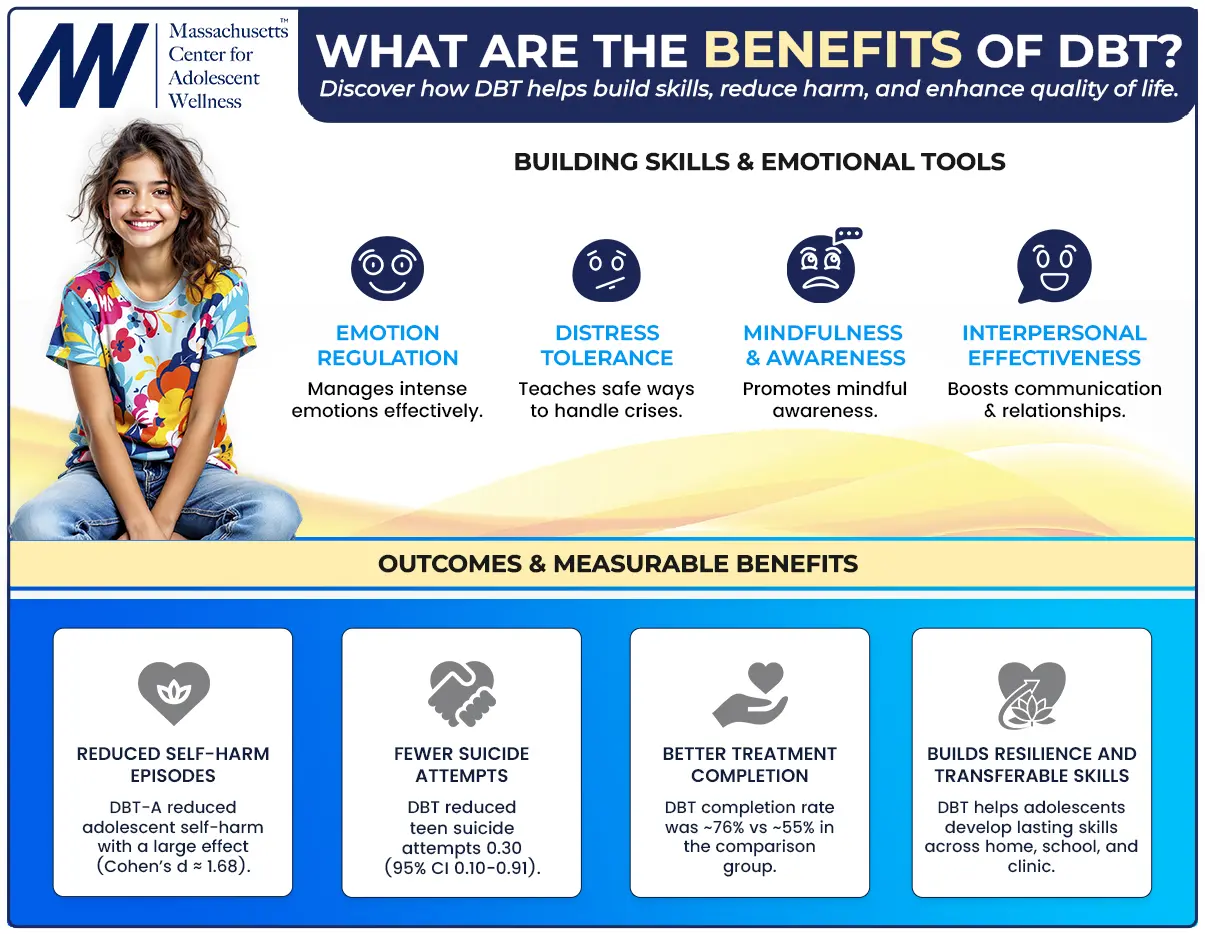
Through mindfulness, patients learn to accept that they’re doing their best. They discover and accept their feelings as reality instead of pushing them away. DBT helps teens fully experience emotions in a healthy way, allowing them to process and express their feelings without shutting down or suppressing them. Through DBT, teens learn how to use their rational thoughts to change those feelings before they can begin to dominate the mind and turn into potentially destructive actions.
Our goal during DBT is to help teenagers build a growth mindset where they can actively and rationally confront their fears. They learn to manage troubling impulses and reduce emotional reactivity by combating them before they become harmful.
What Mental Health Conditions Does Adolescent DBT Treat?
DBT therapy is highly effective for treating a wide range of mental health conditions that commonly affect adolescents, including mental health concerns such as co-occurring disorders, eating disorders, and emotion dysregulation. Understanding how DBT addresses specific symptoms can help families make informed treatment decisions.
Depression Symptoms in Adolescents
Depression symptoms in teens often include persistent sadness, loss of interest in activities, sleep disturbances, and feelings of worthlessness. DBT helps adolescents manage these symptoms through emotion regulation skills and mindfulness practices. Teens learn to identify triggers for depressive episodes and develop healthy coping strategies to prevent emotional spiraling.
Borderline Personality Disorder Symptoms
DBT was originally developed to treat BPD symptoms, making it the gold standard treatment for this condition. Common BPD symptoms in adolescents include fear of abandonment, unstable relationships, identity disturbance, and emotional instability. DBT’s interpersonal effectiveness skills help teens build healthier relationships, while distress tolerance skills reduce impulsive behaviors.
PTSD Symptoms and Trauma Response
Adolescents experiencing PTSD symptoms such as flashbacks, nightmares, hypervigilance, and emotional numbing benefit significantly from DBT’s trauma-informed approach. The therapy helps teens develop grounding techniques and emotional regulation skills to manage trauma responses effectively.
Body Dysmorphia and Self-Image Issues
Body dysmorphia affects many adolescents, causing distorted perceptions of their physical appearance and significant distress. DBT’s acceptance and mindfulness skills help teens develop a healthier relationship with their body image while reducing compulsive behaviors related to appearance concerns.
Major Depressive Disorder
For teens diagnosed with major depressive disorder, DBT provides essential tools for managing severe depressive episodes. The therapy’s focus on building mastery and pleasant activities helps combat the hopelessness and withdrawal commonly associated with this condition.
What Skills Does DBT Teach Adolescent Patients?

Dialectical behavior therapy teaches adolescents five core sets of skills: mindfulness, emotional regulation, distress tolerance, interpersonal effectiveness, and problem-solving. DBT helps teens learn skills in a structured skills group setting, where they participate in regular sessions designed to support skill acquisition and application. Each module focuses on different aspects of emotional and interpersonal functioning, ensuring a comprehensive approach to treatment. The nuances of dialectical behavior therapy can differ based on the individual situation and the cause of the treatment.
The following skills tend to build on each other, ultimately creating a better system for the teen patient and their support system to acknowledge potentially harmful emotions. While also actively addressing them and seeking out alternative means of action:
Mindfulness Skills
These involve understanding and knowing how to spot the signs of potentially harmful emotions.
Emotional Regulation and Distress Tolerance Skills
These focus on better protecting oneself from either end of the extreme emotional spectrum. This includes taking care of one’s body by eating and sleeping well, avoiding drugs, and using strategies to manage emotional crises without escalation, which help teens regulate emotions and support behavior change. It also includes consciously controlling urges that could harm yourself and others.
Interpersonal Skills
These can help adolescents better approach situations where interactions with others may trigger emotional extremes. This includes both in-the-moment tactics to approach these interactions and more overarching skills to build healthier relationships with others, improving their interpersonal relationships.
Self-Awareness and Empathy Skills
These focus on building the ability to recognize and validate the viewpoints of others, compromise and negotiate, and work together to manage emotional situations. These skills focus on moving away from the “right” and “wrong” mindset, which creates an environment where multiple viewpoints can be valid.
Problem-Solving Skills
These focus on tactics and strategies to manage differences of opinion or other situations that could otherwise escalate.
How Do DBT Skills Help Manage Behavioral and Impulse Control Issues?
DBT skills are particularly effective for helping adolescents manage specific behavioral challenges and impulse control disorders. Real-world applications of these skills demonstrate their practical value in daily life. DBT techniques, such as distress tolerance and radical acceptance, equip teens to handle stressful situations in their everyday lives, supporting them as they navigate difficult emotions and real-world challenges.
Trichotillomania and Hair-Pulling Behaviors
For teens struggling with trichotillomania (a disorder that involves recurrent, irresistible urges to pull out hair from the body), DBT’s distress tolerance skills provide healthy alternatives. Teens learn to use ice cubes, stress balls, or fidget toys when experiencing the urge to pull. Mindfulness skills help them recognize triggers and early warning signs, while emotion regulation techniques address the underlying emotional distress that often drives these behaviors.
Panic Attack Management
When adolescents experience a panic attack, DBT skills offer immediate relief strategies and are commonly used in panic disorder therapy in Massachusetts. The TIPP technique (Temperature, Intense exercise, Paced breathing, Paired muscle relaxation) helps teens quickly reduce panic symptoms. Mindfulness skills teach them to observe panic sensations without judgment, reducing the fear that often intensifies attacks.
Grief and Loss Processing
DBT helps adolescents process grief through acceptance and emotion regulation skills. Teens learn that grief comes in waves and develop healthy ways to honor their feelings while maintaining daily functioning. The therapy’s emphasis on building mastery helps grieving teens find meaning and purpose during difficult times.
How Is DBT for Adolescents Typically Structured?
DBT requires complete buy-in from the patient and the entire family system. Therefore, therapy sessions typically consist of a few essential components that a patient walks through:
- Evaluation: A medical professional determines that the patient and symptoms in question are a good fit for DBT.
- Individual psychotherapy: The patient learns basic skills in a safe and personal environment through individual therapy. Individual psychotherapy provides personalized, one-on-one sessions focused on understanding and addressing the teen’s unique challenges, emotional regulation, and skill development.
- Family and group therapy: The patient and parents, along with other family members, learn to work through negative emotions and approach potentially triggering interactions through group therapy. Group therapy includes group sessions where teens practice skills with peers, engage in role-play, and receive peer support.
- Phone coaching: Phone coaching is available between sessions, allowing clients to access their therapists for brief, real-time guidance (typically 5-10 minutes) to help apply DBT skills during crises or distressing moments.
Many DBT programs are conducted in person to maximize engagement and provide a comprehensive treatment experience. DBT worksheets are also used as resources for practicing skills outside of sessions.
Typically, these components take between four and six months, depending on the severity of the issue. However, patients and families have the option to continue if ongoing services seem to be beneficial.
How Does Trauma-Informed DBT Address Complex Trauma in Adolescents?
For adolescents who have experienced complex trauma, DBT requires specialized adaptations to ensure safety and effectiveness. Trauma-informed DBT recognizes that traditional approaches may need modification for teens with histories of abuse, neglect, or other traumatic experiences.
Dissociative Identity Disorder and DBT
Teens diagnosed with dissociative identity disorder benefit from DBT skills that help manage dissociative episodes. Grounding techniques using the five senses help teens stay present, while distress tolerance skills provide alternatives to dissociation during overwhelming moments. The therapy’s emphasis on self-compassion is particularly important for teens struggling with identity fragmentation.
Managing Depersonalization and Derealization
For adolescents experiencing depersonalization (feeling detached from oneself) or derealization (feeling that surroundings are unreal), DBT offers practical grounding strategies. These include holding ice cubes, naming objects in the room, or engaging in intense physical sensations to reconnect with reality. Mindfulness skills help teens observe these experiences without panic, reducing their intensity and duration.
Complex Trauma and Emotional Dysregulation
Teens with complex trauma histories often struggle with severe emotional dysregulation. Trauma-informed DBT emphasizes safety and stabilization before processing traumatic memories. Skills training focuses on building a foundation of emotional regulation and distress tolerance before addressing deeper trauma work, often in conjunction with specialized trauma therapies. Evidence shows that DBT works for teens with complex trauma and emotional dysregulation, supporting healing and positive outcomes.
When Is Medication Used with DBT Therapy?
While DBT is highly effective as a standalone treatment, many adolescents benefit from combining therapy with psychiatric medications. Understanding when and how medications complement DBT helps families make informed decisions about comprehensive treatment approaches.
Anxiety Medication and DBT Integration
Anxiety medication, such as SSRIs or buspirone, may be prescribed alongside DBT for teens with severe anxiety symptoms. These medications can reduce baseline anxiety levels, making it easier for adolescents to learn and practice DBT skills. The combination is particularly effective for teens whose anxiety interferes with their ability to engage in therapy or daily activities.
Antidepressants and Mood Stabilization
For adolescents with major depressive disorder or bipolar disorder, antidepressants or mood stabilizers may be used in conjunction with DBT. Medications like Wellbutrin or SSRIs can help stabilize mood, while DBT skills provide long-term coping strategies. This integrated approach addresses both the biological and psychological aspects of mental health conditions.
Medication Management Considerations
When medications are used alongside DBT, close collaboration between therapists, psychiatrists, and families is essential. Regular monitoring ensures that medications support rather than interfere with skill development. Some teens may eventually reduce or discontinue medications as their DBT skills strengthen, while others benefit from long-term medication support.
Frequently Asked Questions
What is adolescent dialectical behavior therapy?
Adolescent dialectical behavior therapy is an evidence-based treatment designed to help teens manage intense emotions, improve relationships, and reduce harmful behaviors through skills training and therapy sessions.
How does DBT therapy help with depression symptoms in teens?
DBT therapy teaches emotion regulation and coping skills that can reduce depression symptoms and improve daily functioning in adolescents.
Can DBT therapy be combined with anxiety medication for adolescents?
DBT therapy can be used alongside anxiety medications, such as SSRIs or buspirone, as part of a comprehensive treatment plan.
How does DBT therapy address panic attacks in teenagers?
DBT therapy teaches distress tolerance and mindfulness skills that help teens recognize and manage panic attacks.
What are the main skills taught in adolescent DBT therapy?
Main skills include mindfulness, emotion regulation, distress tolerance, interpersonal effectiveness, and self-awareness.
How is adolescent DBT therapy structured?
Adolescent dialectical behavior therapy usually includes individual sessions, group skills training, and family involvement over several months.
Can DBT therapy help with body dysmorphia in teens?
DBT therapy can help teens with body dysmorphia by teaching acceptance and emotion regulation strategies.
Is DBT therapy effective for treating BPD symptoms in adolescents?
DBT therapy is considered the gold standard for treating borderline personality disorder symptoms in adolescents.
What is the difference between DBT and cognitive behavioral therapy for teens?
DBT focuses on acceptance and change through skills training, while cognitive behavioral therapy targets changing unhelpful thoughts and behaviors.
How does DBT therapy address grief and loss in adolescents?
DBT therapy helps adolescents process grief by teaching emotion regulation and acceptance skills.
Can DBT therapy be used for trauma and dissociative identity disorder in teens?
DBT therapy can be adapted for trauma and dissociative identity disorder by incorporating trauma-informed approaches and skills for managing dissociation.
Contact the Massachusetts Center for Adolescent Wellness Today
Seeking mental health treatment for your adolescent child can be challenging. Professional support and guidance can be beneficial, especially if their behavior threatens their well-being or those around them. At MCAW, we approach mental and behavioral health concerns holistically.
Our treatment plans are designed to give adolescents the tools they need to manage their well-being. We offer a range of treatment options for teens and their families, including family therapy and other treatments for depression and anxiety. If you’re struggling with adolescent dialectical behavior therapy concerns, our team is here to help you take the next step toward recovery.
Contact our team today to learn more about how DBT can help your teen live a happier and healthier life.